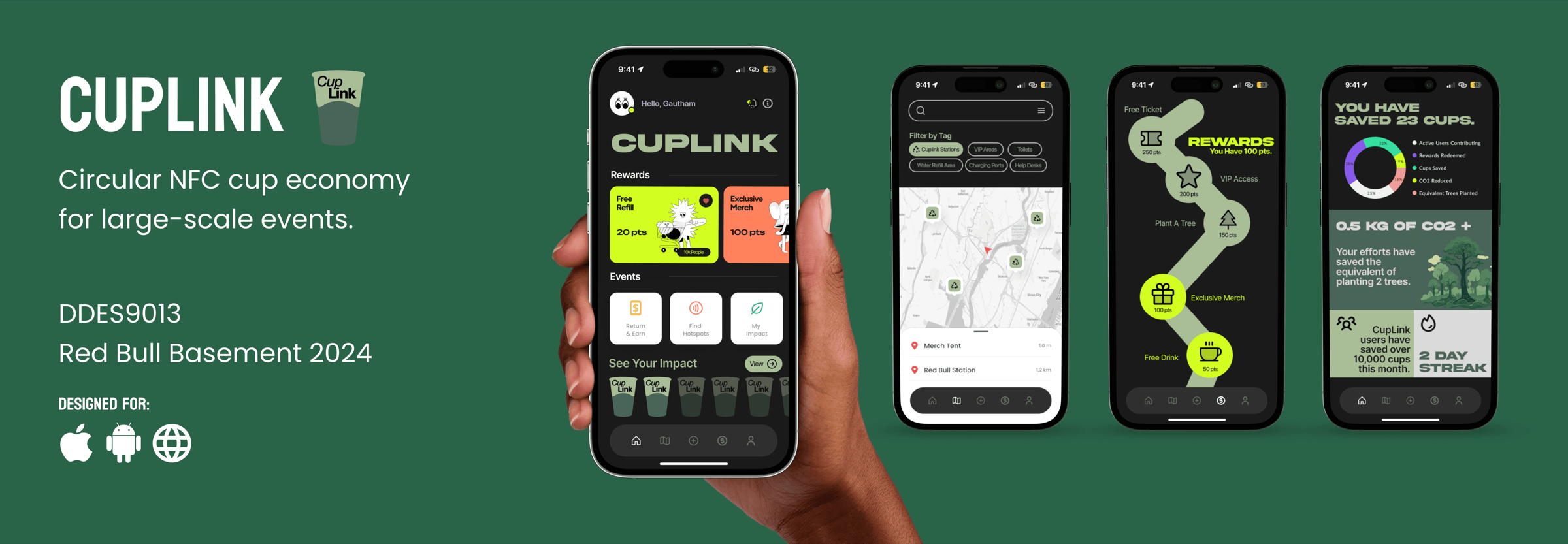
Product design · Sustainability · Circular design
CupLink
An NFC and AI reusable cup that pays festival-goers to return it, and shows organisers the waste they saved.
The brief
Design for a circular economy, then prove it at a festival.
The brief was open: create a design solution to a contemporary challenge using circular design. I pointed it at the single-use cup, an object festivals throw away by the million and almost never recover.
The work ran hybrid across research, physical prototyping and a mobile product, and shipped as a hundred-page report, prototypes, graded presentations and a startup pitch video.
01 — The problem
Australia burns through 1.84 billion single-use cups a year. One percent is recycled.
Festivals concentrate that waste into a weekend. The rest goes to landfill. A cup that lives for one drink is the clearest circular-design failure I could find, and the one people notice least because it is normal.
Figures: 1.84 billion cups a year · 3,461,700 tonnes of plastic · 1% recycled
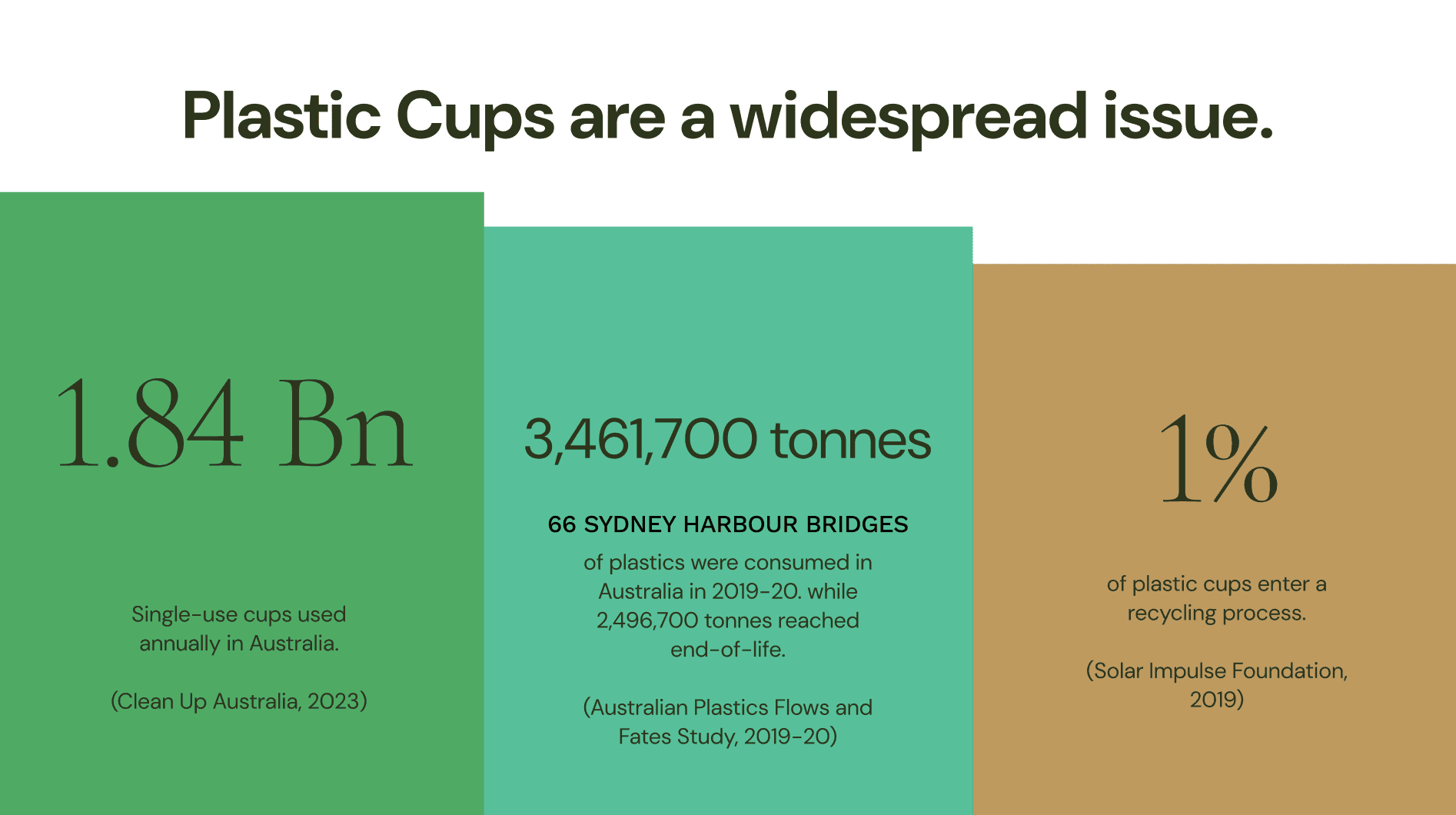
The scale, stated plainly. Single-use cups are a widespread and largely unrecovered waste stream, and festivals are where it is most visible.
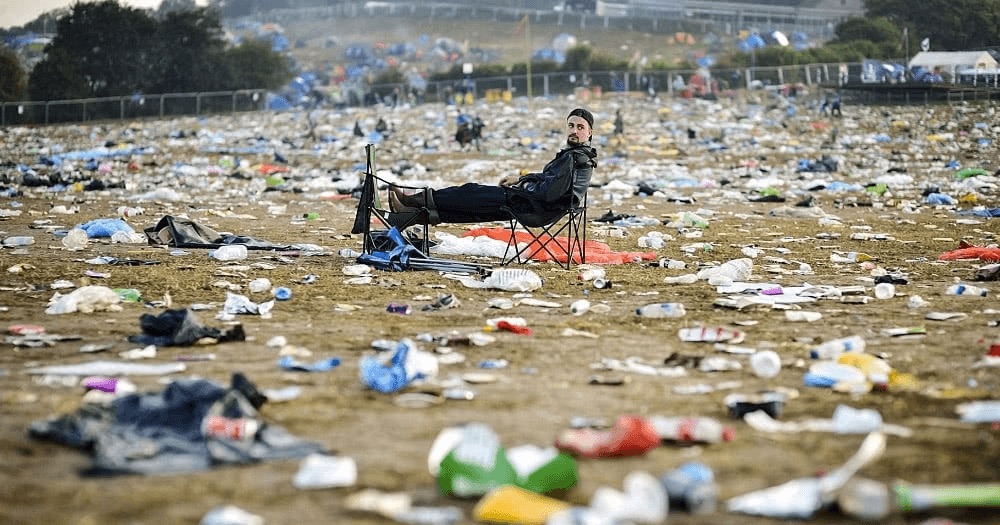
The site. The morning-after festival ground is the problem in one frame.
02 — The research
I went to the festival, watched the bins, and studied what already exists.
Before designing anything I ran three passes at the problem: living the user journey, mapping the competition, and observing the return behaviour in context. I wanted to know not just that cups get thrown away, but the exact moment a person decides not to walk one back.
Auto ethnography
Attended a sold-out music festival to understand the user journey firsthand.
Competitor analysis
Analysed existing solutions in the space, weighing their pros and cons to inform the design.
Contextual inquiry
Observed and spoke to festival-goers and event staff, focusing on how they interact with cups and waste disposal.
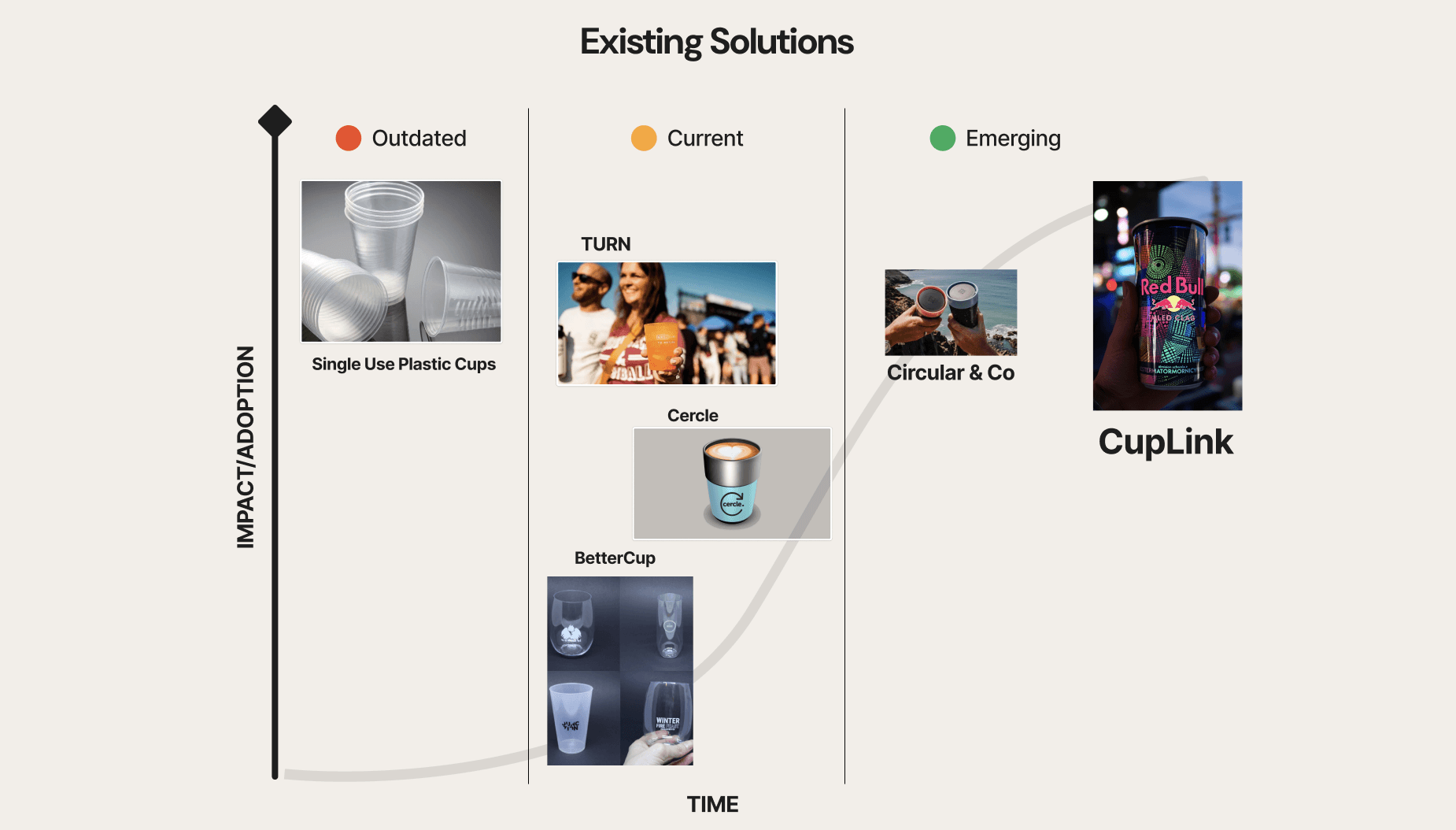
Where the field sat. Existing solutions were either outdated single-use plastic or heavy deposit-return schemes. The gap was a return that felt instant and rewarding rather than a chore.
The question
How might we reduce plastic waste at large events, for fans and organisers alike, so that we create a zero-waste event experience?
03 — The user
The return has to be worth something the person actually wants.
Designing for this user meant balancing tangible incentives with feasible innovation. The core persona is a 28-year-old music lover: college-educated, city-based, a 9-to-5 job through the week and at least three major festivals a year. Active on social, always after a unique festival experience, and happy to show off something exclusive or sustainable.
Their line, in their words: "I want my festival experience to be fun, hassle-free, and good for the planet." The design had to deliver all three without asking for effort.
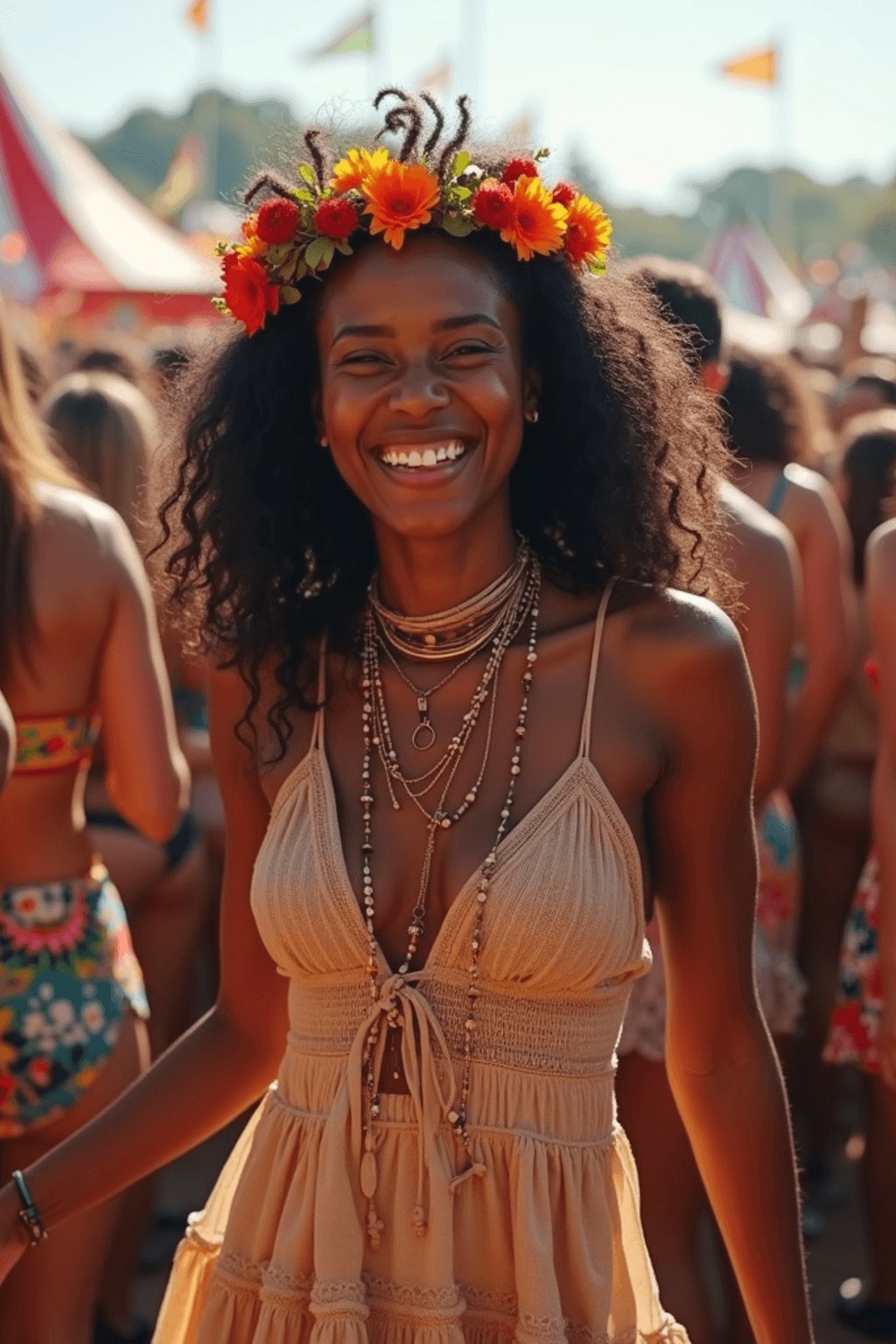
Two sides of the same pain. Organisers carry high waste-management costs, little measurable impact and inefficient returns. Attendees lack motivation to return cups, find return stations too much effort, and want a reward they can feel.
No motivation to return
Festival-goers felt uninspired to return cups when the reward was minimal.
Return stations too hard to find
Unintuitive and time-consuming return systems discouraged participation.
Reward has to be tangible
Users wanted immediate rewards, free refills or festival perks, for the effort.
04 — Ideation
Sketch wide, then filter for feasible, desirable and viable.
Rapid ideation ran every concept through three questions: can it be implemented within existing festival operations, will users actually engage with it, and does it have a sustainable cost structure for the long term. The ideas that scored high on all three set the direction.
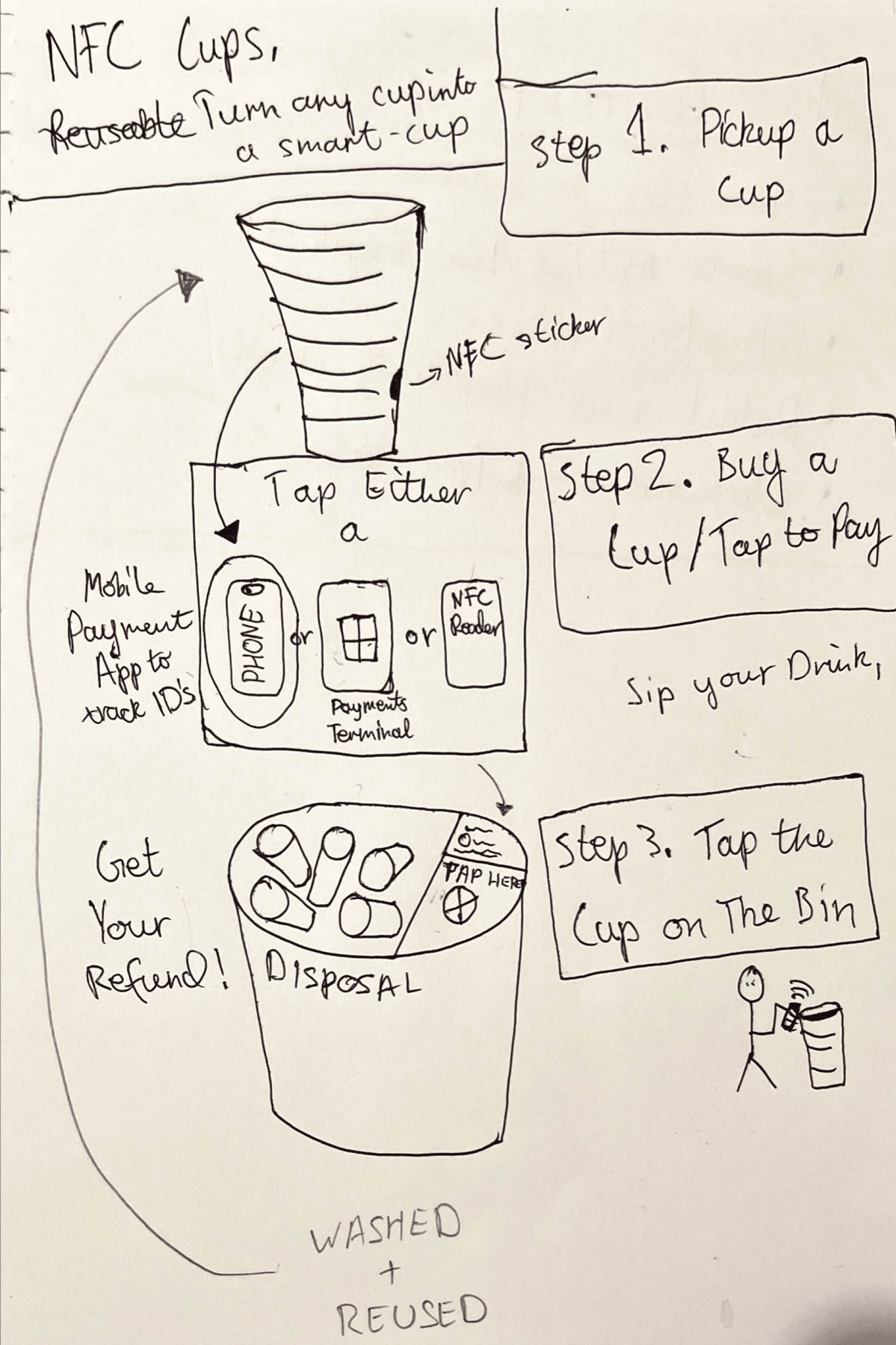
From loose sketches to a system. Pick up a cup, tap to pay, sip, then tap the cup on the bin to return it, get washed and reused.
NFC-enabled cups
A tap for fast, frictionless returns instead of a queue at a deposit desk.
Gamified rewards
Points and perks tied to sustainability goals, so returning is worth doing.
Personalised impact
Each user sees the waste and carbon their returns saved, tracked over time.
05 — The system
Mapping CupLink as a loop, not a product.
The service blueprint tied the physical cup, the return bins, the app and the back-of-house wash cycle into one repeating loop: pick up, drink, return, reward, repeat. The point was to make sure the incentive and the operations lined up at every stage.
The reward-led approach had evidence behind it. 72% of event attendees are more likely to engage in sustainability programs when incentivised with tangible rewards, which is exactly what CupLink puts on the return.
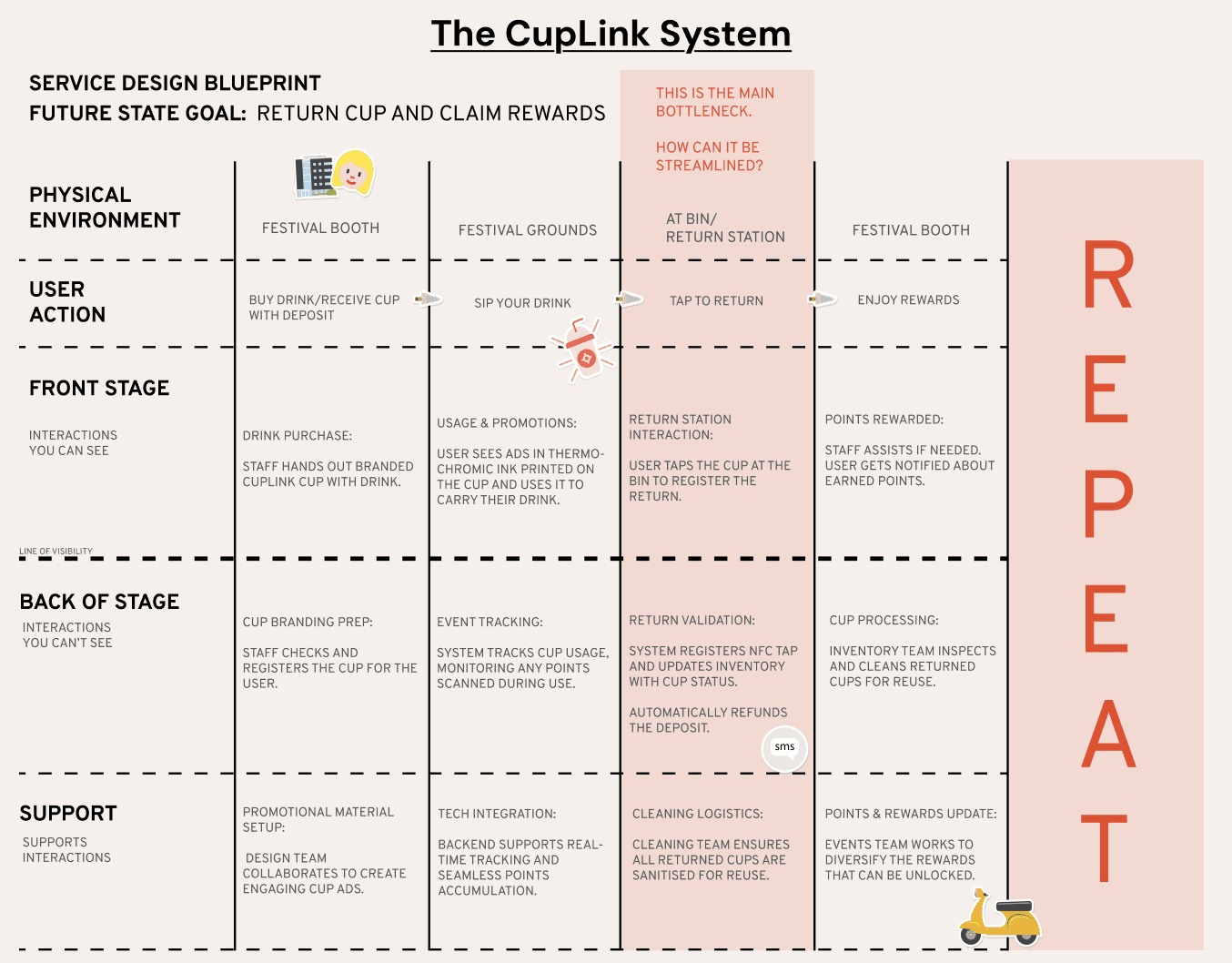
The CupLink system. A future-state blueprint from pick-up to return and claimed rewards, ending on repeat.
06 — Prototyping and testing
A plastic cup, an NFC sticker, and a paper sleeve.
To test the concept before building anything digital, I took a regular plastic cup, stuck an NFC tag on it and wrapped it in a paper sleeve. That was enough to watch people tap a cup on a bin and read whether the loop felt natural. Physical and digital artefacts were prototyped simultaneously.
Testing ran through persona-based walkthroughs, cultural probes and focus groups. Walkthroughs surfaced subconscious waste-disposal habits and attitudes to reused items; cultural probes generated community-driven motivations; focus groups exposed unclear signage, confusing flows and uncertainty around the reward system.
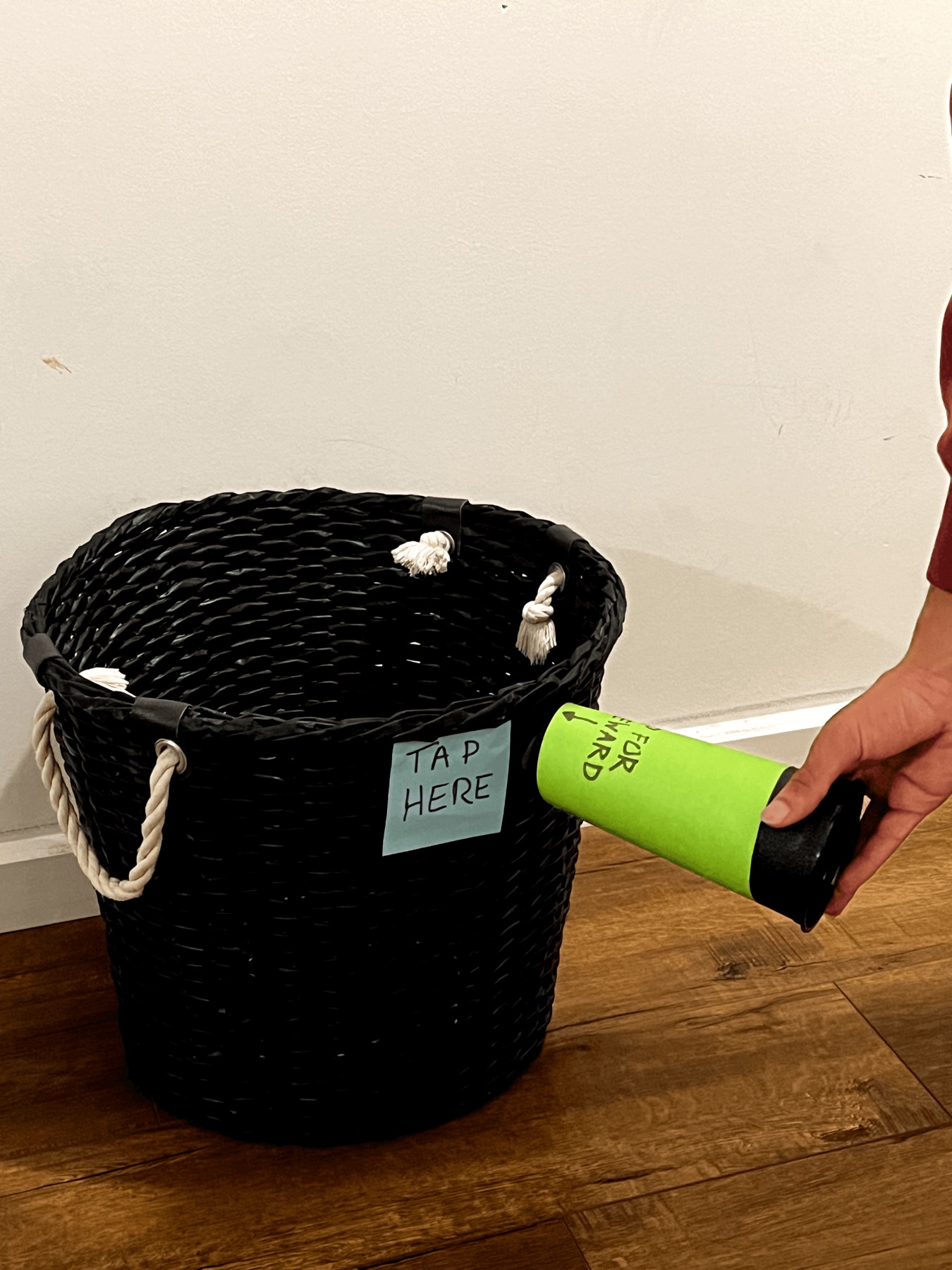
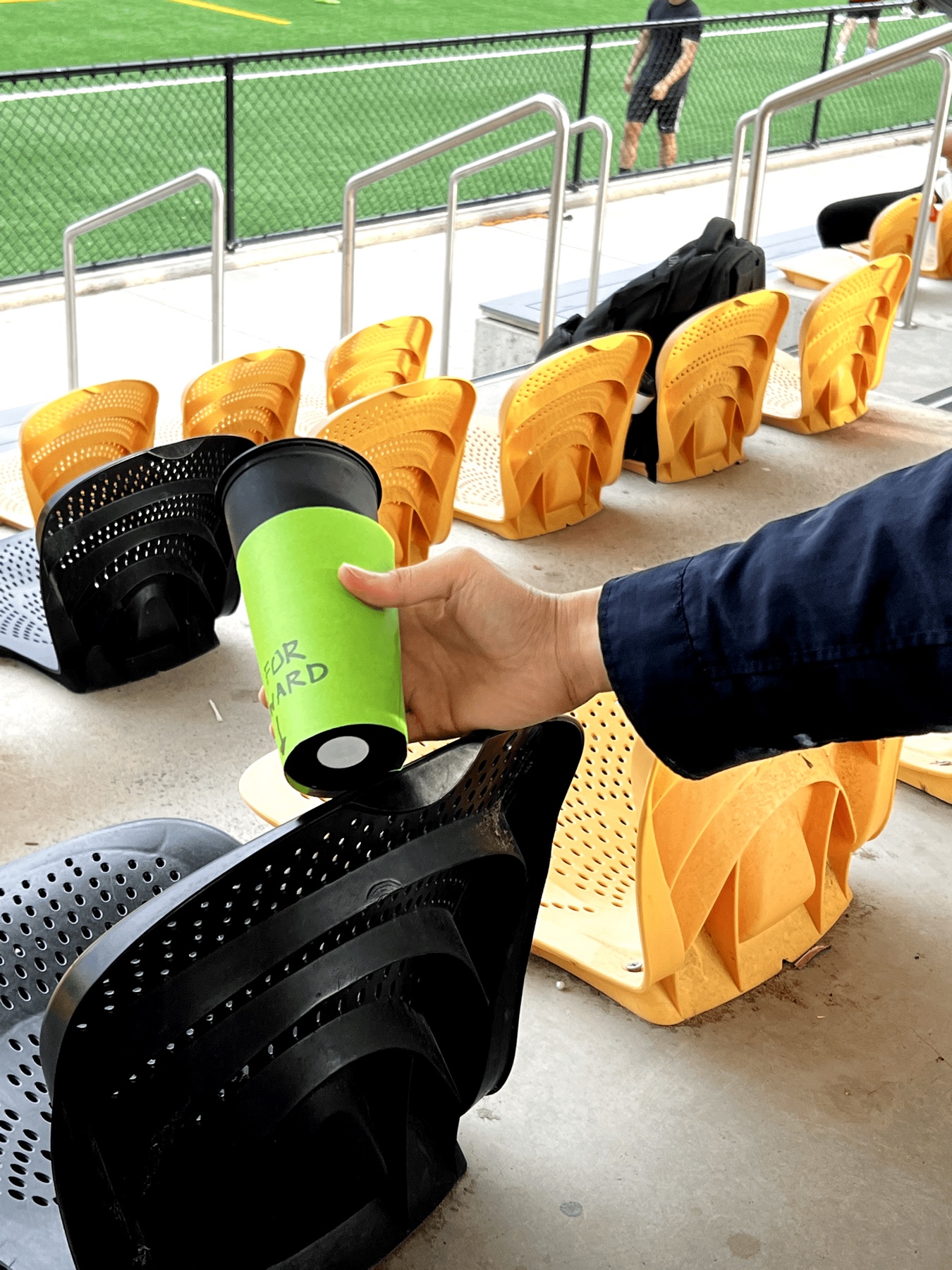
Testing the tap in the wild. A low-fidelity NFC cup and bin were enough to see whether the return gesture read as instant, and where the reward and signage needed to be clearer.
Highlight the NFC tap
Users liked the reward but wanted the return instruction made more visually obvious on the cup.
Address hygiene
Concerns about reuse and damaged cups led to a quality-check step to pull damaged cups out of circulation.
Keep a streak
People wanted to see progress over time, a streak counter, to stay motivated across a festival.
07 — High fidelity
The mobile app carried the reward, the map and the impact.
With time tight, the mobile UI was prioritised for the high-fidelity prototype. It centred on three things users asked for: a clear reward path, an easy way to find return stations, and a personalised view of the impact each return added up to.
Two ideas gave the cup itself a reason to come back. Thermochromic ink that changes colour with temperature, and cups funded by ads rather than a deposit, inspired by FreeWater. On the ink, a focus-group participant said it best: "I love the colour changing ink. I would just take it home and use it. It is like a piece of memorabilia."
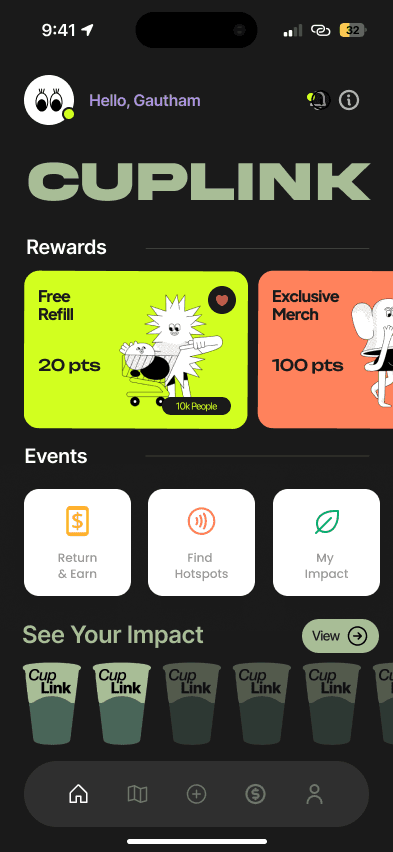
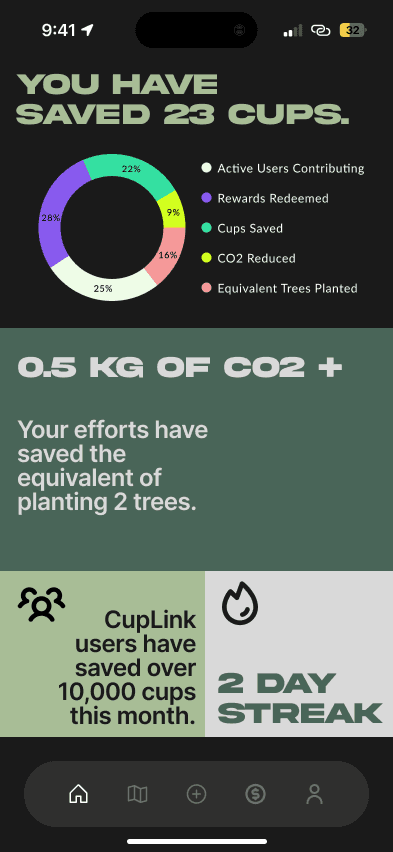
Reward and proof, side by side. The home screen leads with what the user can earn; the impact screen turns their returns into cups, carbon and a streak they can see.
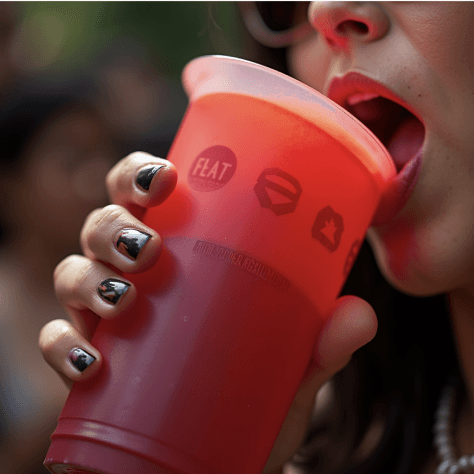
The cup as a keepsake. Colour-changing ink made the object worth keeping, which quietly works against throwing it away.
08 — Outcome
94% in the Masters, then Top 50 of 110,000 at Red Bull Basement.
The project scored a 94% mark in my Masters degree. I then entered CupLink into Red Bull Basement 2024, the global startup competition, where it placed Top 50 worldwide out of 110,000 startups and the pitch video scored 9 out of 10.
To show real traction rather than a deck, I opened a waitlist and collected 100 signups in a few days, then coded a working MVP using AI.
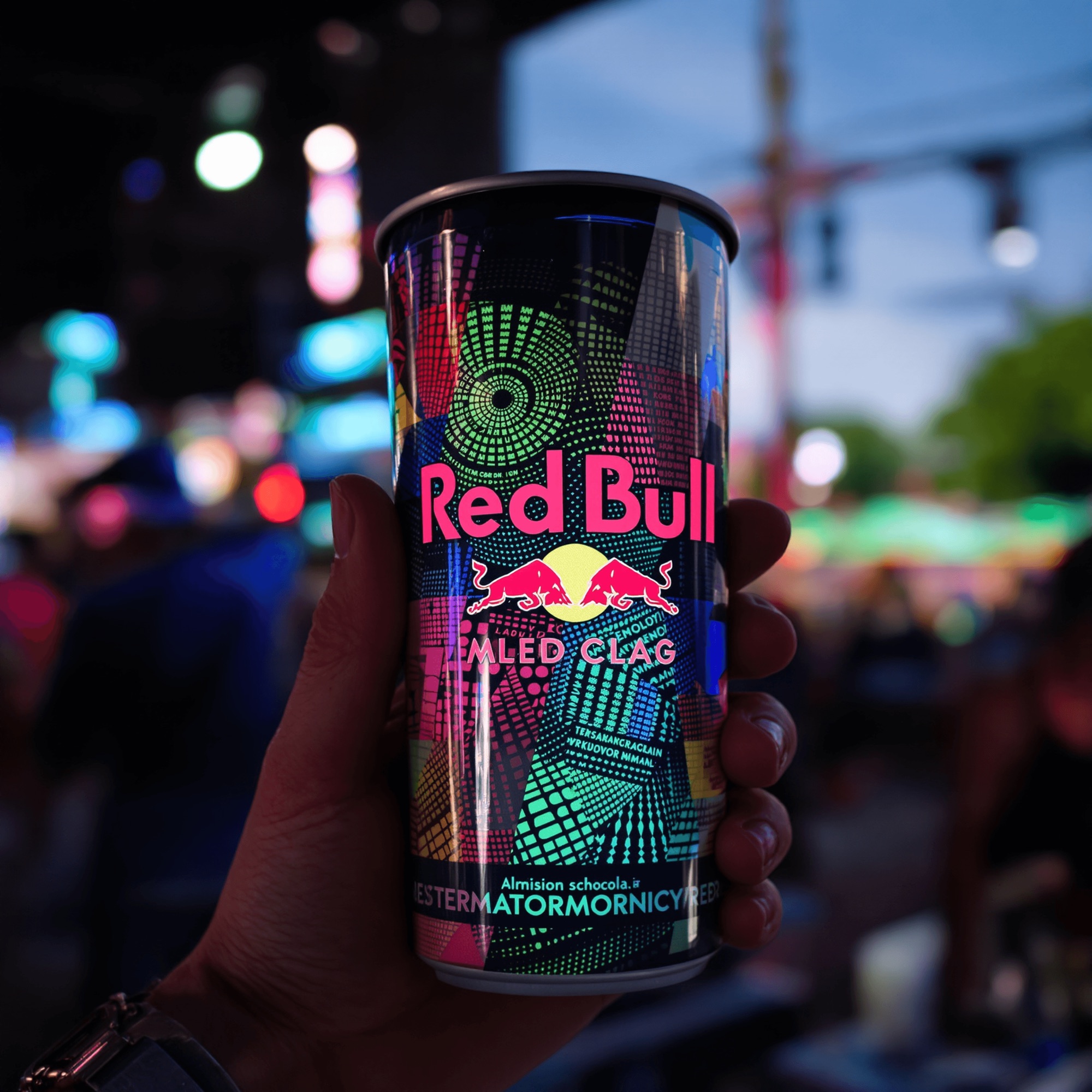
CupLink, on brand. The final concept rendered as a festival cup, the object the whole system exists to bring back.
Reflecting on my values as a designer
What the project sharpened in how I work.
- Innovative. I keep looking for new and better ways to solve a problem, not the first one that works.
- Empathy. I put myself in the user's place to understand what they actually need, which here meant watching the bins, not just asking.
- Customer obsession. I am driven by helping the user reach their goal, so the reward had to be something they genuinely wanted.
- Transparency. I believe in communicating openly and honestly, and the impact screen holds the product to that with the user.