UX research · Global collaboration · Community design
Designing a community-led digital solution in Bandung
A field research project with the community of Lebak Siliwangi: reconnecting a neighbourhood with its cultural roots while opening economic opportunity for local artisans.
Long story short
Design isn't just about pixels. It is about people.
A global design project sponsored by the Department of Foreign Affairs and Trade and the University of Sydney, based at the Institute of Technology Bandung. The work was about enabling a community to reconnect with its cultural roots while driving economic opportunity for local artisans.
I worked in a team of seven across four countries and four disciplines, spending two weeks in the field in Bandung and two months collaborating remotely.
Time: 2 weeks fieldwork, 2 months remote
Setting: Lebak Siliwangi, a kampung nestled between Bandung Zoo and the Cikapundung River
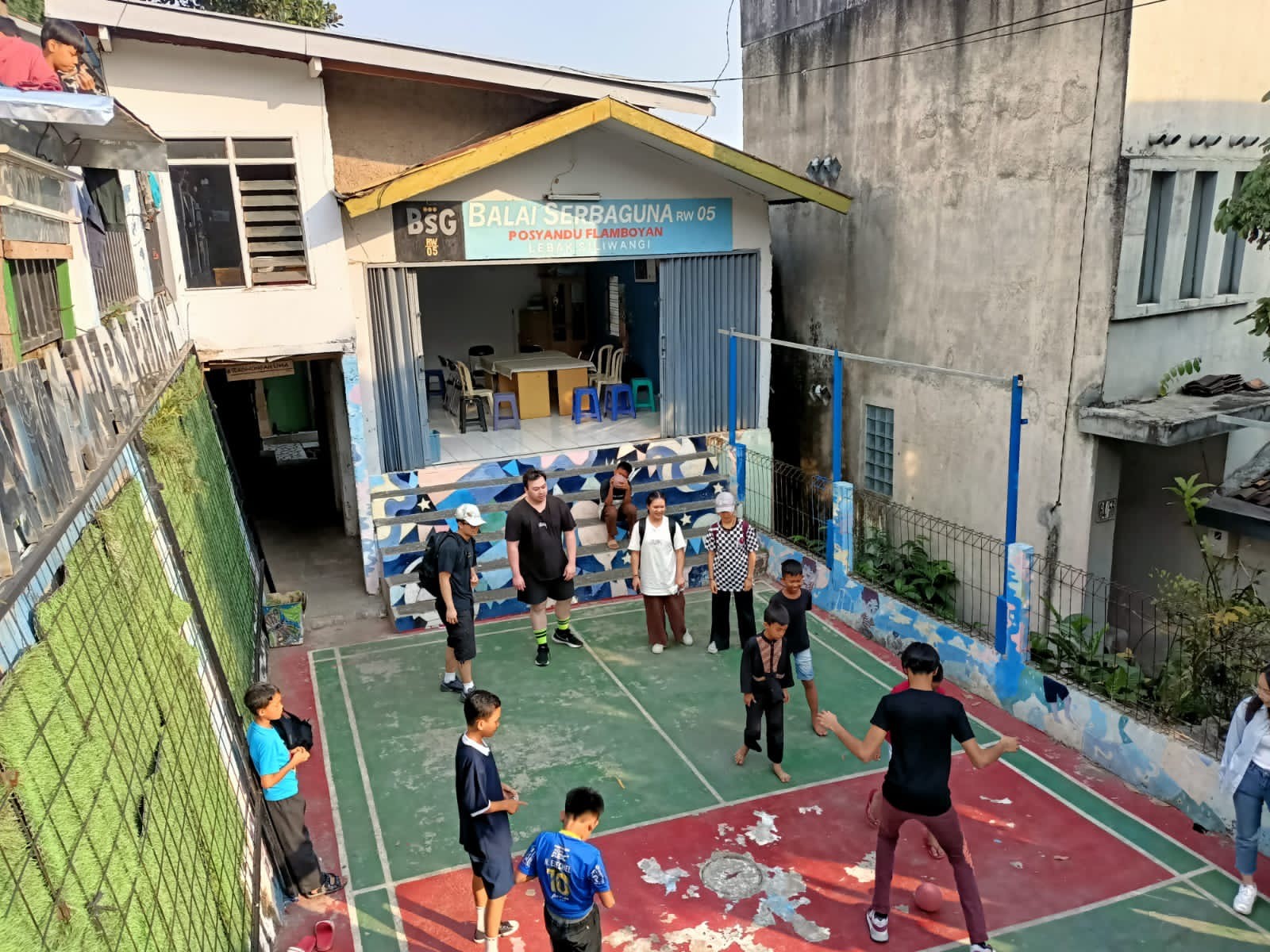
In the field. Fieldwork ran out of the Balai Serbaguna, the RW 05 community hall, where residents gather to talk and play.
01 - The problem
Culture fades when connection is lost.
Bandung's cultural heritage was under threat. Our research revealed that the youth felt disengaged from older generations, and creatives faced economic struggles.
To address these challenges I combined participatory design research with cultural immersion, living in the neighbourhood rather than studying it from a distance.
Youth disengaged
Of youth aged 18 to 30 felt disengaged from local traditions.
No digital platform
Of artisans lacked digital platforms to promote their crafts.
Visibility
Artisans faced economic struggles, with limited foot traffic and low visibility among tourists.
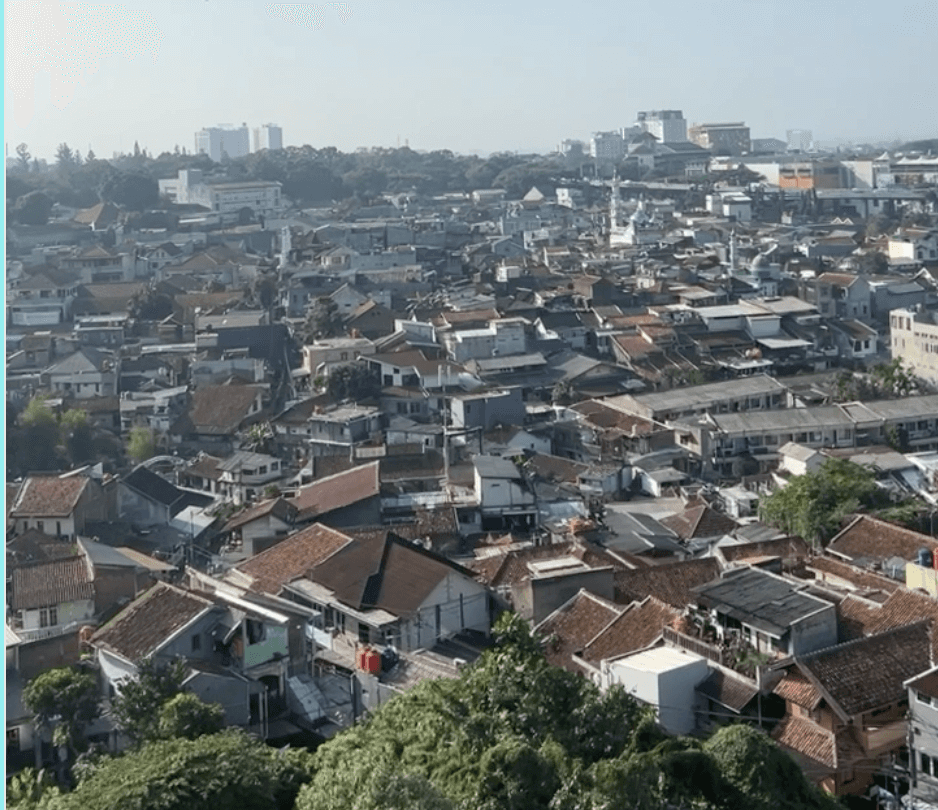
Lebak Siliwangi, Bandung. A dense informal settlement with a concentrated and evolving culture of public art.
02 - Listening first
To design for a community, you need to listen first.
We used five different research methods to understand the creative economy of Lebak Siliwangi: spatial and cultural typology, interviews, surveys, and affinity diagram analysis. Reading them against each other is what surfaced the two pain points below.
Generational disconnect. Younger generations lacked interactive, modern ways to learn about their cultural roots.
Economic barriers for artisans. Artisans struggled to showcase their work due to low digital adoption, and lacked access to global markets.
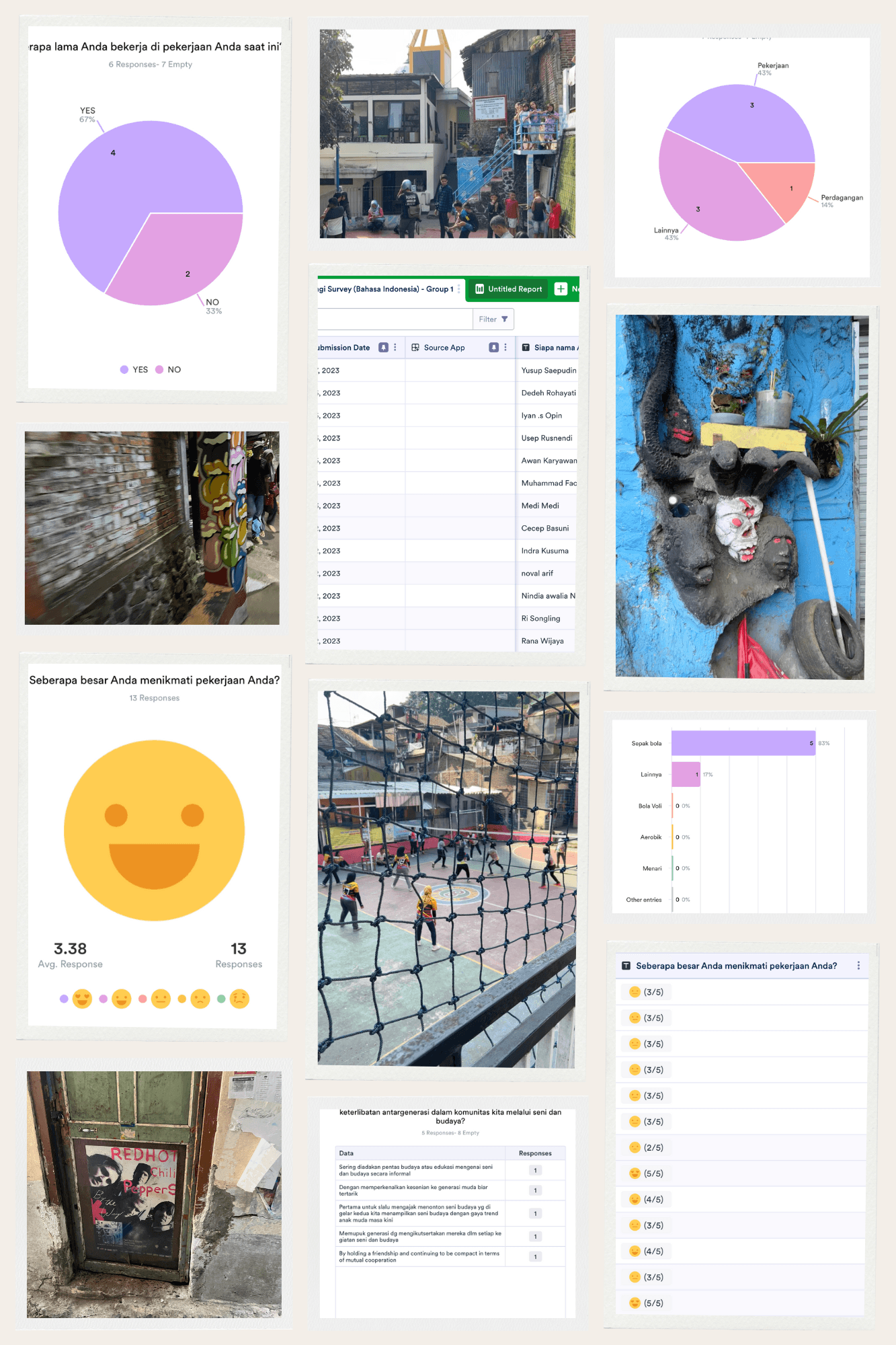
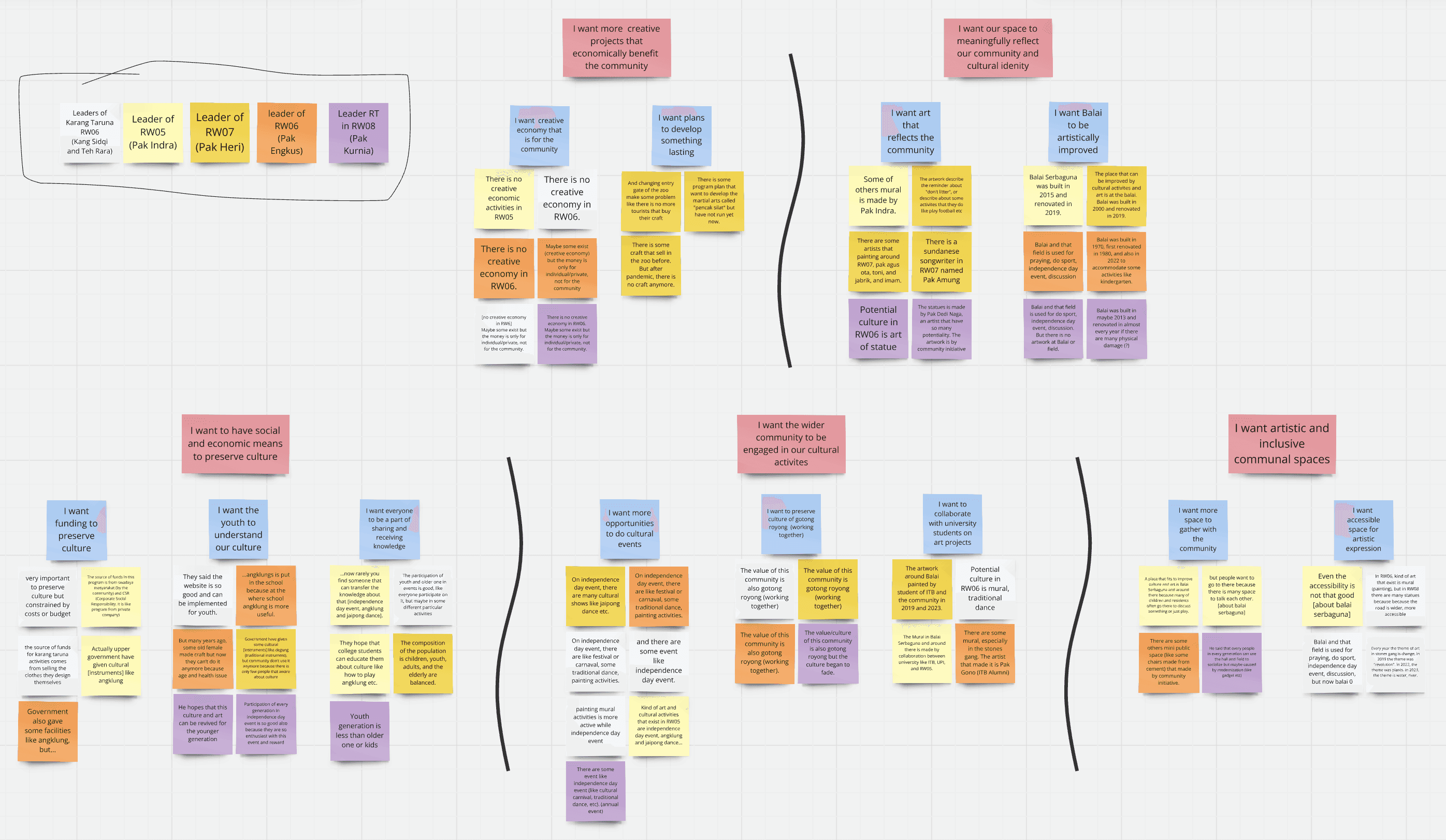
Synthesis. Survey and interview data on the left; on the right, community needs clustered into themes through affinity diagramming.
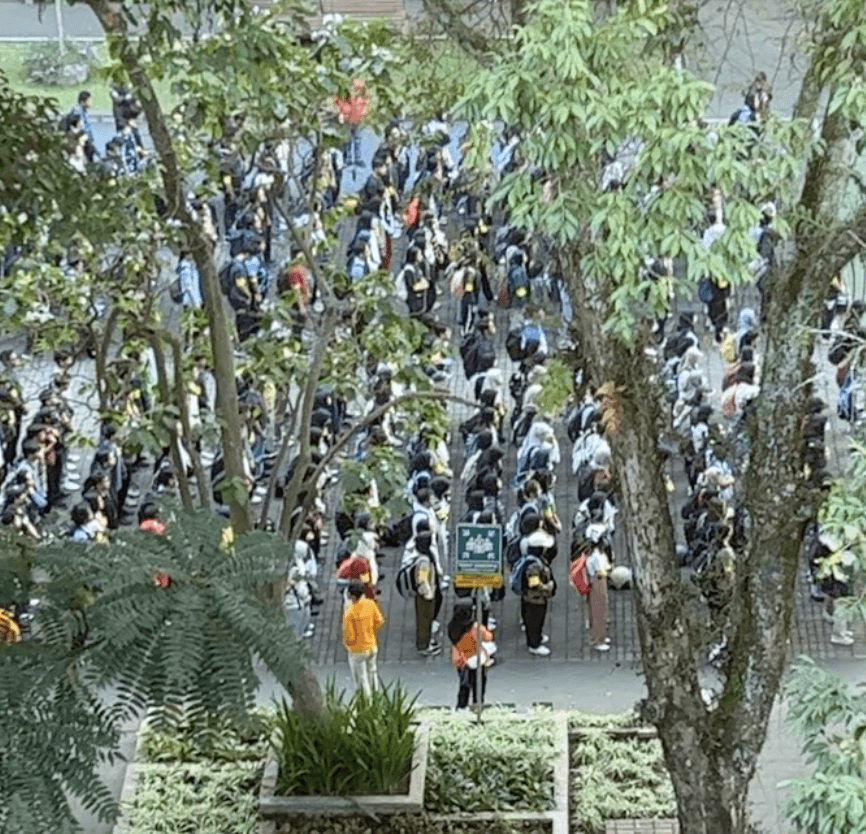
Immersion. Interviews and observation ran alongside daily life in the kampung, not separate from it.
Problem statement
How might we create a platform for the community of Lebak Siliwangi to preserve and celebrate their cultural heritage, so that artisans gain economic opportunities and younger generations feel more connected to their traditions?
03 - The solution
Building the solution.
Using insights from the community, I ideated a solution to bridge the gap between cultural preservation and economic empowerment: an experience serving both younger residents and local shopkeepers.
Cultural exploration app
- Interactive AR features. Users could scan artifacts like the Angklung to hear its sound, view its history and learn its significance.
- Guided cultural maps. An interactive guide connecting users to artisan workshops and cultural landmarks across Lebak Siliwangi.
- Quantifiable impact. In a pilot survey, 70% of respondents expressed strong interest in interactive cultural education tools.
Artisan marketplace
- Story-driven e-commerce. Artisans showcased their crafts alongside video narratives, communicating the cultural and personal stories behind their work.
- Global reach. Integrated global shipping expanded the audience beyond the local community.
- Quantifiable impact. Addressing the 74% of artisans who lacked digital platforms for promotion bridged a critical gap.
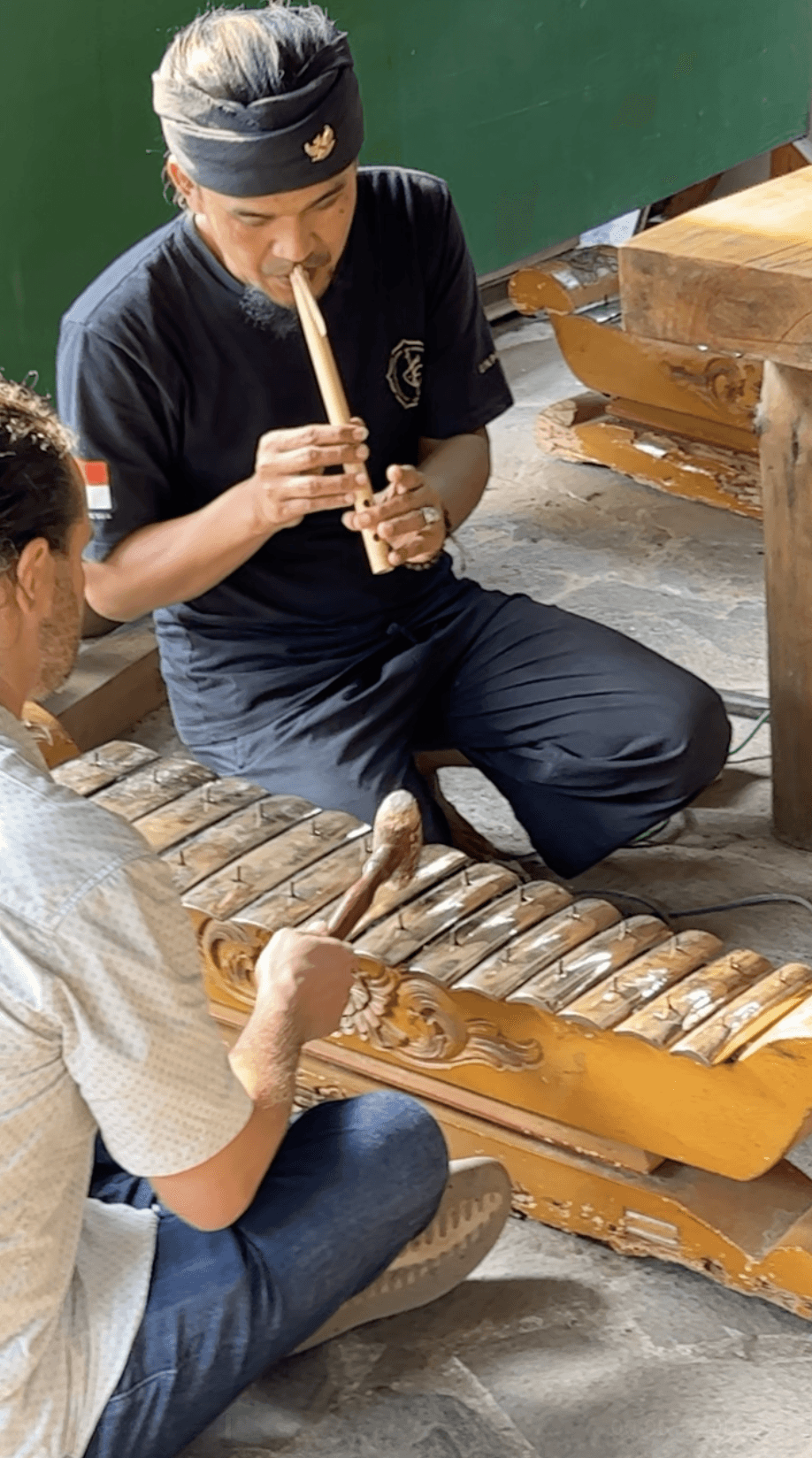
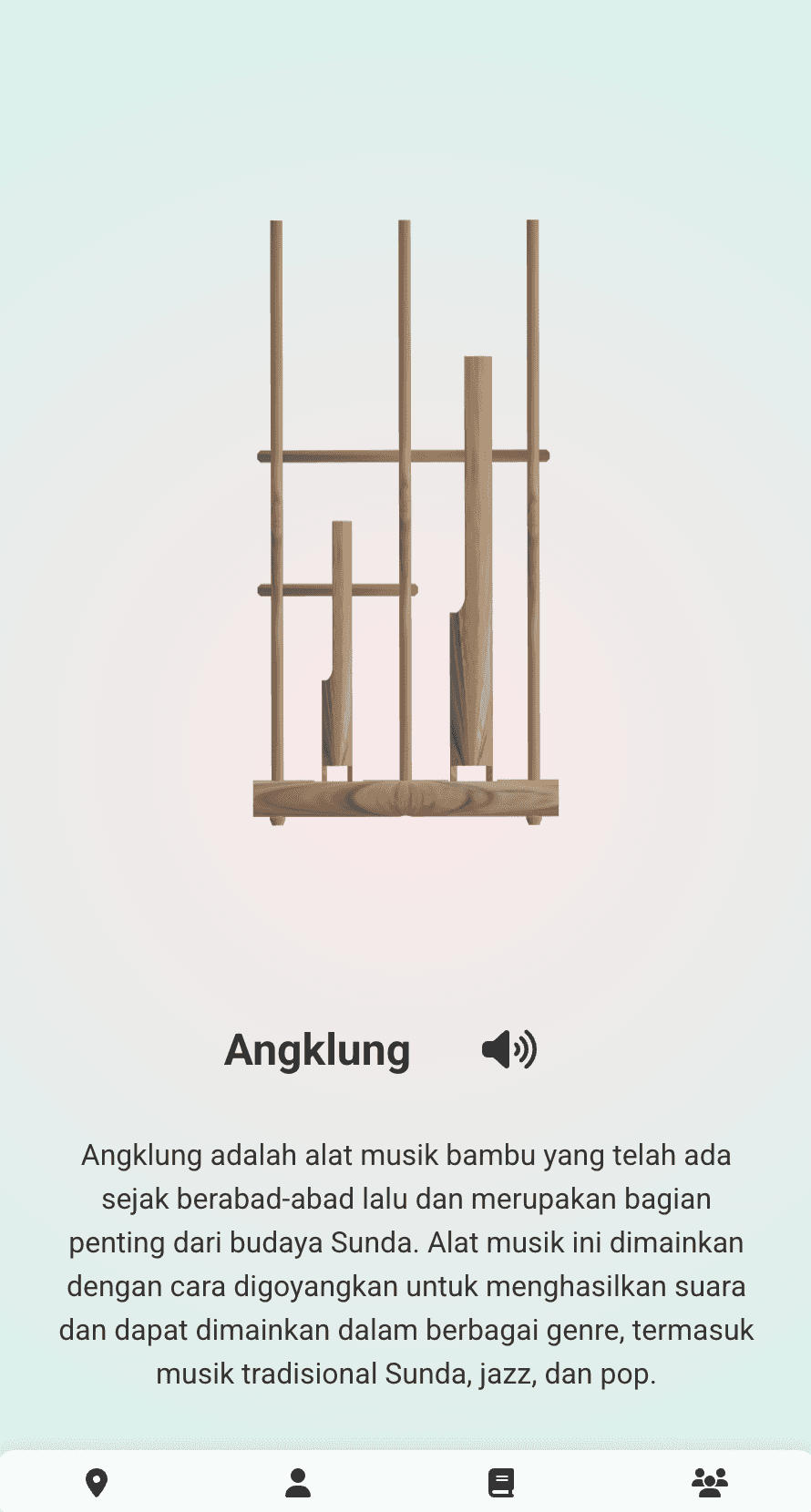
Cultural exploration. Scanning an artifact surfaces its sound, history and significance, in place.
04 - Prototyping and testing
Good design isn't just tested. It is co-created.
To ensure the solution was usable and aligned with community needs, I adopted a collaborative, iterative process.
Prototyping the vision. I coded the MVP using Vite, React and Spline 3D.
User testing and iteration. We validated the concept through interviews with various members of the community, taking the prototype back to the people it was for.
05 - The deliverable
The final poster.
The team's research was presented as a four-part academic poster, from the SDG 11 framing and site history through to findings on Lebak Siliwangi's art culture and the recommendations that followed.
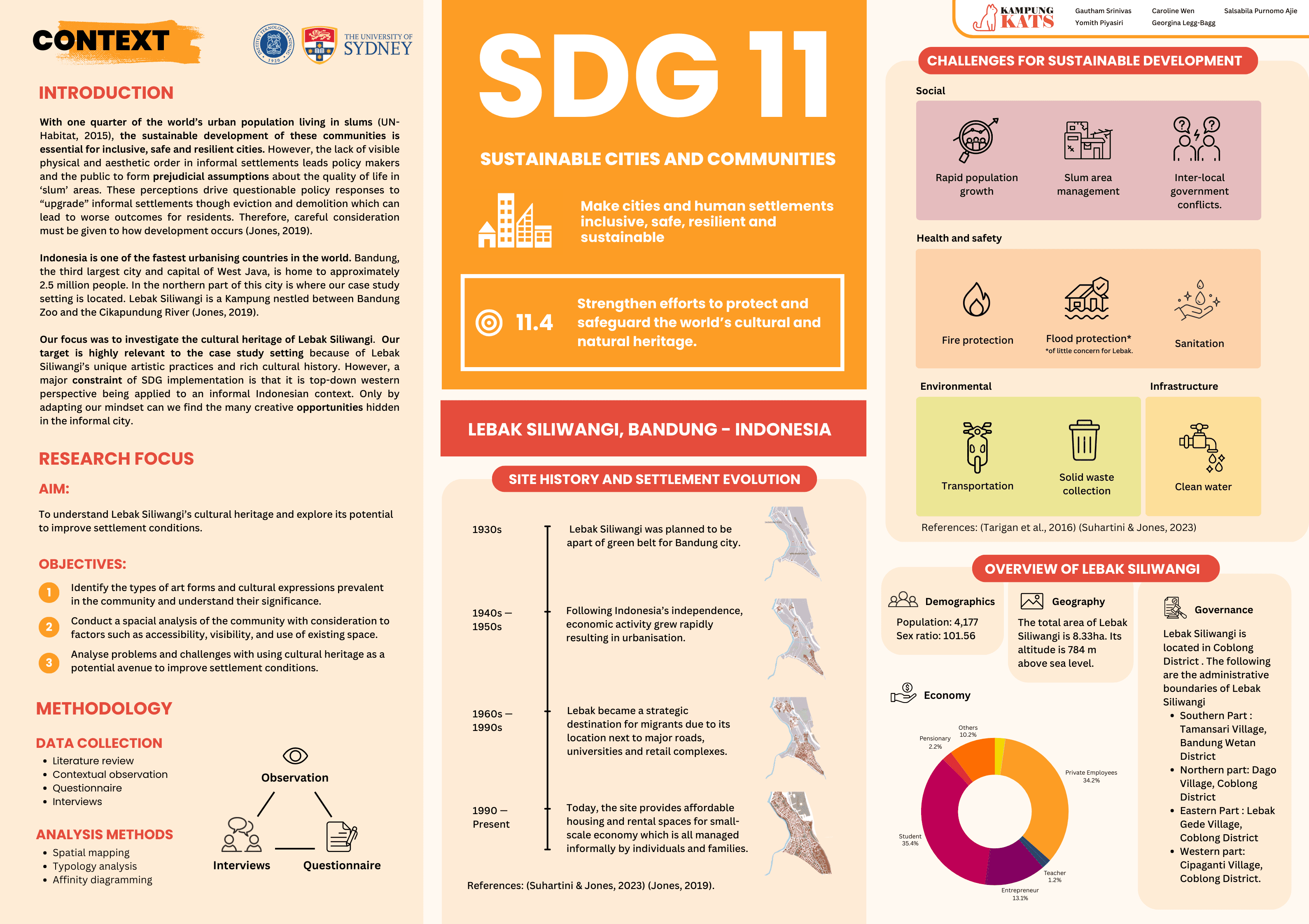
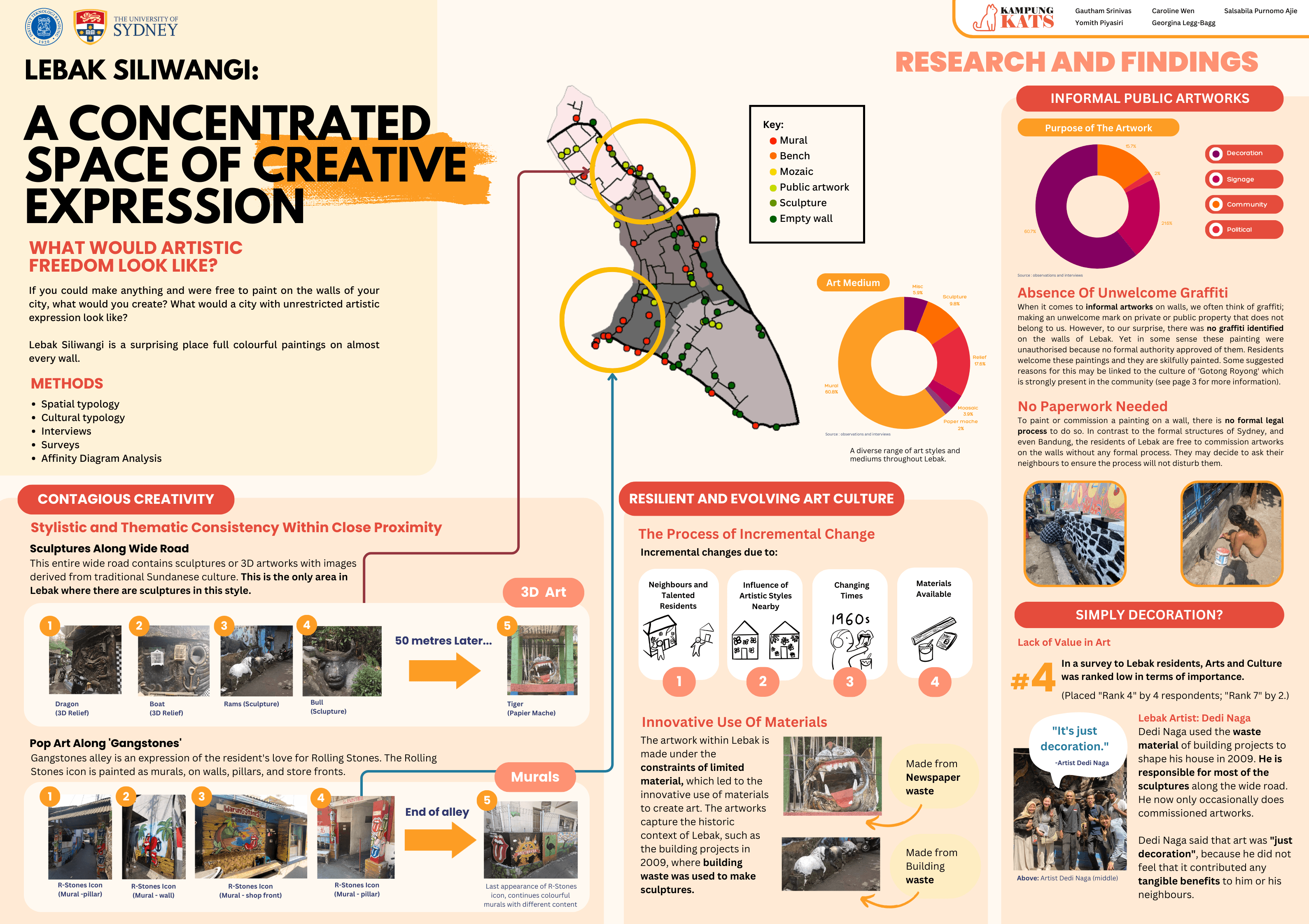
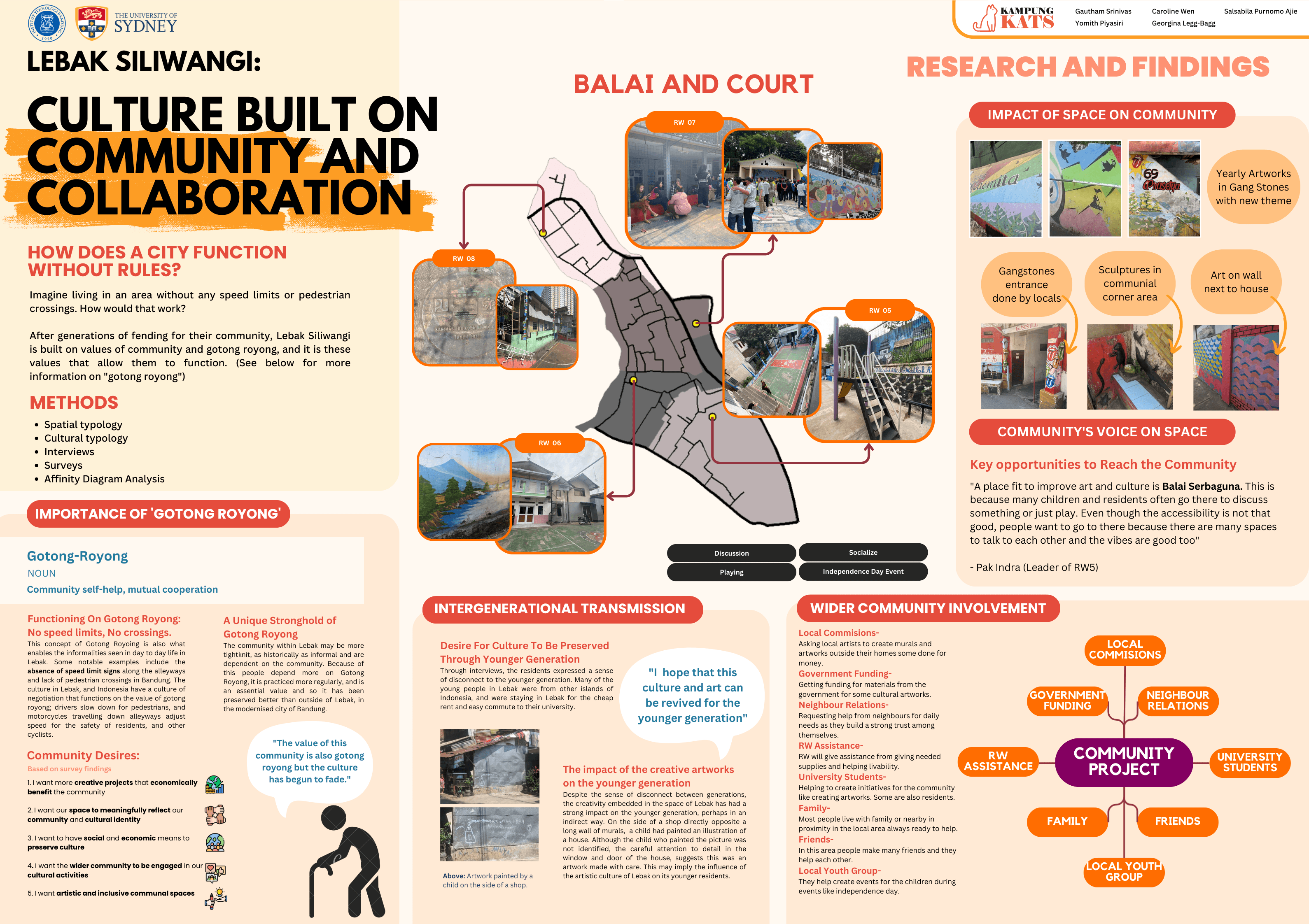
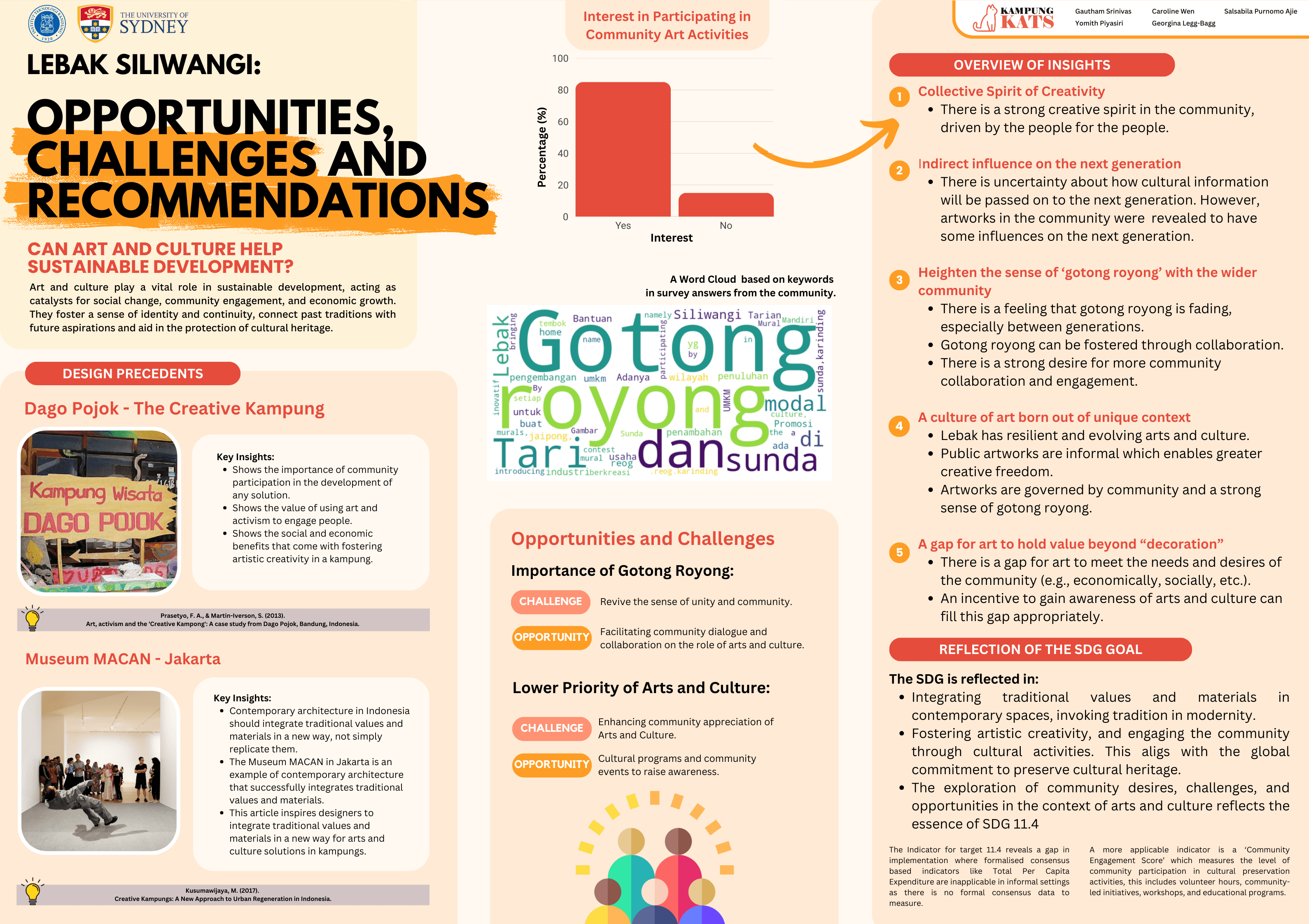
Kampung Kats. The final research poster, produced for the Institute of Technology Bandung and the University of Sydney.
Reflections
What the work taught me.
- Design starts with asking the right questions. A sharp problem statement, written with the community rather than for it, did more to shape the solution than any interface decision.
- Listen before you build. Five research methods, read against each other, kept the work honest about what the community actually needed rather than what was easy to make.
- Immersion beats observation. Two weeks living in Lebak Siliwangi surfaced context that no remote study would have reached.
- Multidisciplinary teams see more. Working across UX, engineering, linguistics, architecture and urban planning, in four countries, produced a richer read of one small neighbourhood.